
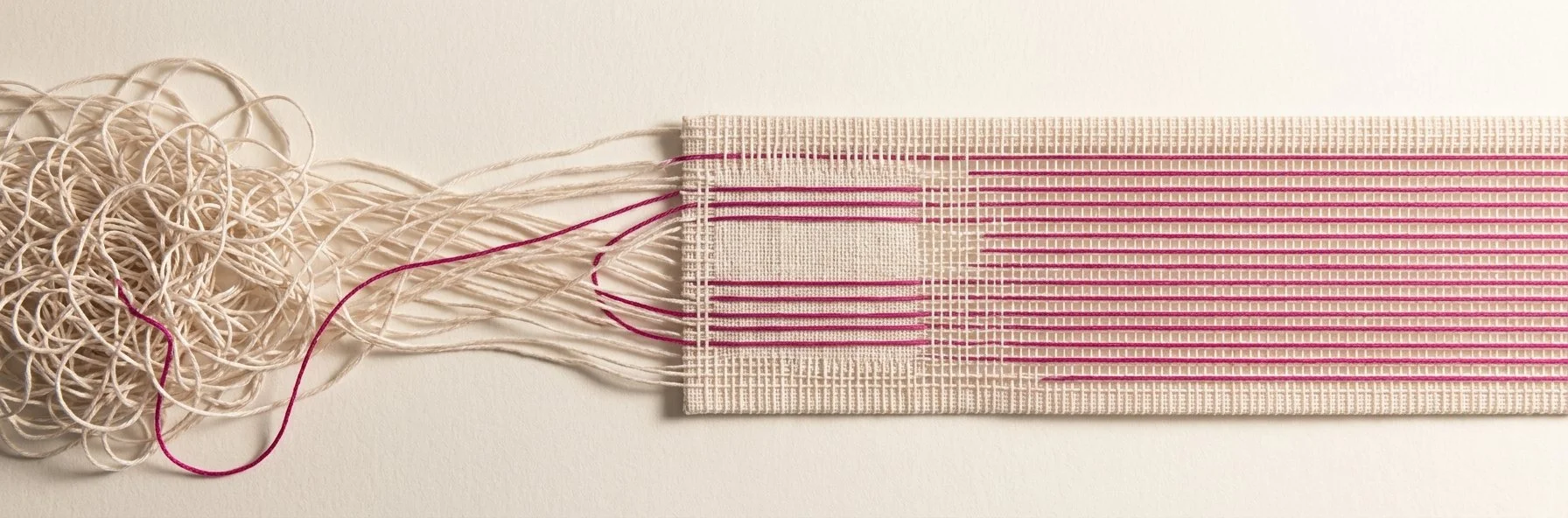
Let's find the thread that makes you stand out
Most online content sounds like just about anyone. I'll find what's unique about you, so your content sounds unmistakably like you – whether it's one page or a whole system.
ServicesHow I can help
There are three ways to work with me, and they start in the same place: getting specific about what’s actually true and different about your organisation, so it sounds unmistakably like itself and not like everyone else – the part an agency or an AI can’t work out for you.
Whether you need one asset fixed or a whole system built, we begin there, before anyone writes a word.
These are three distinct ways in, not steps in a sequence – pick the one that fits, or start with a conversation and we’ll identify it together.

The Untangle
For when you want the real problem identified before you fix anything.
A focused, standalone first engagement. I look at what you have, we talk it through, and you come away with a written finding: what specifically sets you apart, how your voice actually works – what you sound like, what you’d never say – why your current communications aren’t landing, and what those missed opportunities might be costing you, with clear recommendations for what to do next.
It stands on its own. And if you decide to go further, the Untangle becomes the first stage of a Mend or a Weave rather than a separate exercise.
What you come away with
A clear read on how your organisation currently comes across, channel by channel
What genuinely sets you apart, stated in plain words
Where your messaging is losing the clients or hires you most want
Your communications mapped against your vision, mission and goals
Your voice described: what you sound like now, what you should sound like
What to fix first, and what it’s costing you to leave it
A simple roadmap for organising and developing your comms from here
A straight recommendation on the right next step: a Mend, a Weave, or nothing more for now
Best for
Organisations that sense their messaging is off but can’t yet say why, or who want a considered second opinion before committing to a rebuild.

The Mend
For when your materials just aren't working.
A bounded project to strengthen and rewrite the client-facing communications that matter most. We can start with the Untangle, then rebuild the pieces that are costing you – a specific landing page, a pitch deck, a partner bio, a key proposal – so they say something true, in your own voice, and land with the people you’re trying to reach. This will typically take two to three weeks.
The kind of pieces I’d write or rework
Website copy: a landing page, an About page, a service page
Articles and thought-leadership pieces
Op-eds and bylined commentary
LinkedIn and other social posts
Speeches, talks and talking points
Executive, partner and team bios
Pitch decks and proposals
Client newsletters and email campaigns
Internal announcements and leadership messages to staff
Case studies and client stories
Media statements and award entries
Best for
Organisations whose materials read fine but say little, and who want a senior pair of hands on a defined problem rather than a long agency engagement.

The Weave
For when you're starting from scratch.
The whole thing, built end-to-end.
We define your voice precisely – what you sound like, what you’d never say, the values underneath it – then build the workflow that keeps it that way at volume: guardrails so AI-assisted content stays on-voice, and enough structure that it goes out consistently and stays on-message without anyone micromanaging every draft.
It’s most useful where the words that matter most belong to the people with the least time to write them – a managing partner or a chief executive – so their voice stays theirs even as the output grows. You’re left with a system your team runs, not an abstract strategy deck – so the human character of the organisation survives being scaled up.
A defined tone of voice: what you sound like, what you’d never say
A written style guide your whole team can follow
Core messaging and positioning – the story of what you do and why it’s different
Key messages tailored by audience: clients, talent, partners, media
A communications strategy tied to your goals
A content calendar and editorial plan
Templates for your recurring formats (posts, newsletters, proposals)
AI guardrails and prompts so AI-assisted content stays on-voice
An executive-voice system so leaders’ content scales without losing them
A handover so your team runs it confidently once I step back
What I establish
Best for
Organisations launching or rebuilding, or ready to invest properly in how they come across as they grow.
Not sure which service you need? That's what our first conversation is for.
How we work togetherHow we'd work together
1.
Understand
We find the real reason your communications aren't landing.
2.
A Mend for one problem, a Weave for the whole system – priced to the outcome, not an open meter.
Agree the scope
3.
Do the work – with you
I work as part of your team, not instead of it, so nothing gets lost in translation.
4.
I deliver something you can keep using and any subsequent changes cost just a phone call, not a fresh brief to a stranger.
Hand over
Not sure which service you need? That's what our first conversation is for.
FAQPractical answers to practical questions
-
Usually, yes – it’s what underpins the rest of our work together, and it’s quick. If you’re already clear on exactly what you need, we can scope a Mend or Weave directly.
-
It takes less time than you might expect, but not nothing.
The Untangle needs a couple of conversations with the people who really know the organisation – usually a partner or two and whoever owns the marketing – plus access to what you already have.
After that I work independently and come back with something to react to, rather than sending you questions in instalments.
The work only fails when nobody senior engages at all, so that’s the one thing I’d ask for up front.
-
An Untangle is quick and can usually start within a couple of weeks, depending on my availability.
A Mend typically runs two to three weeks once we’ve agreed the scope.
A Weave depends on how much there is to build, and I’d rather give you a real timeline after the Untangle than an optimistic one before it.